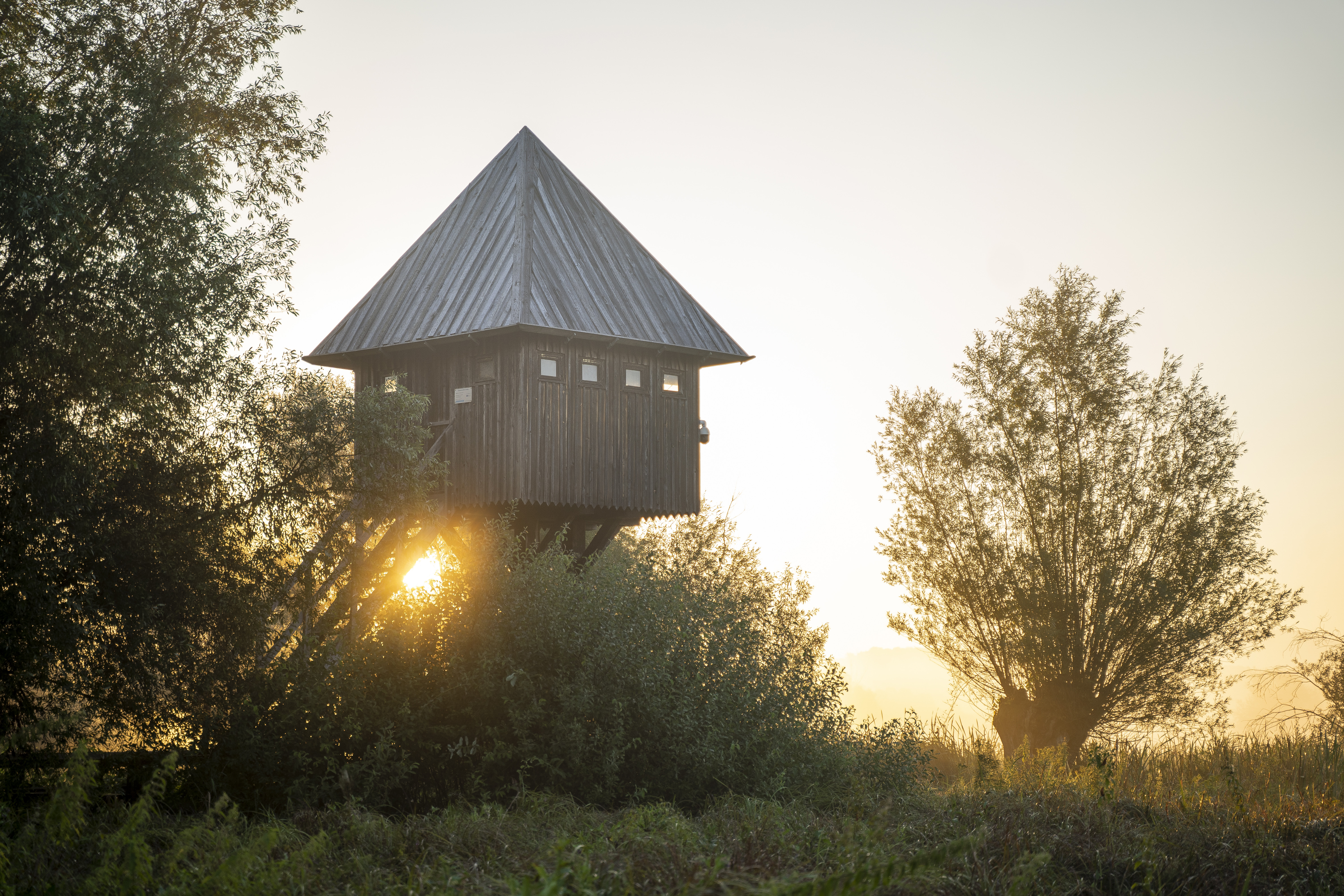
Wetlands are the silent guardians of natural balance – often unnoticed, yet vital for the lives of people, plants and animals, and in the fight against climate change.
Every year on 2 February, we mark World Wetlands Day, which reminds us of the exceptional importance of these natural ecosystems and of the fact that, despite their value, we are losing wetlands faster than any other natural habitat.
At a time of increasingly evident climate change, their role is becoming even more important.
Wetlands in the Municipality of Brežice – a Valuable Part of the Local Landscape
The Municipality of Brežice is particularly rich in natural heritage, as it lies in an area where river systems, floodplains and wet meadows intertwine. Among the most important wetlands in the municipality are Jovsi, one of the most significant wetland areas in the Posavje region, which is also included in the Natura 2000 network.
Jovsi are characterised by exceptional biodiversity, providing habitat for numerous bird species, amphibians, insects and rare plant species. In addition to Jovsi, wetland areas along the Sava and Krka rivers, floodplain meadows and smaller wet habitats are also important, together forming a valuable natural system within the landscape.
These wetlands are not only natural landmarks, but an integral part of the landscape that shapes the identity of the area and influences the quality of life in the municipality.
Why Are Wetlands So Important?
Wetlands perform many key functions that are often underestimated in modern times:
- Natural flood protection
They act as natural water retention areas, storing excess water during heavy rainfall and thereby reducing flood risk. - Natural water filters
Plants and soils in wetlands filter pollutants and improve the quality of surface and groundwater. - Biodiversity hotspots
Wetlands are among the most biologically diverse ecosystems and are essential for the survival of many species, including endangered ones. - Climate change mitigation
Wetlands store large amounts of carbon, helping to reduce the concentration of greenhouse gases in the atmosphere.
Wetlands and Climate Change
Climate change is increasingly affecting the local environment, and its impacts are particularly evident in wetlands. Changes in the amount and distribution of precipitation, prolonged droughts, more frequent heatwaves, and sudden, intense rainfall events directly affect the water regime of wetlands.
Extended droughts cause wetlands to dry out, leading to the loss of habitats for many plant and animal species. On the other hand, short but very intense rainfall can disrupt natural balance, accelerate soil erosion, and reduce the ability of wetlands to effectively retain and filter water.
Rising temperatures also alter plant communities, affecting the entire food chain. Some species retreat while others expand, which in the long term reduces biodiversity—one of the key values of wetlands.
At the same time, wetlands are among the most important natural allies in the fight against climate change. They act as natural buffers against extreme weather events:
during heavy rainfall, they retain excess water and reduce flood risk,
during dry periods, they slowly release water and help maintain environmental moisture,
in their soils and vegetation, they store large amounts of carbon, thereby reducing greenhouse gas emissions.
When wetlands are destroyed or drained, the stored carbon is released back into the atmosphere, further accelerating global warming. Well-preserved and healthy wetlands have the opposite effect—they increase ecosystem resilience to climate change and help local communities adapt to new conditions.
For this reason, wetland conservation is not only a matter of nature protection, but one of the key measures for adapting to climate change and reducing its impacts. Every preserved wetland represents a step towards a more stable, safe and sustainable environment.
A Shared Responsibility for Future Generations
World Wetlands Day reminds us that the conservation of these ecosystems is a shared responsibility—of decision-makers, local communities, individuals and visitors alike. Understanding their role is the first step toward respecting and protecting them.