Climate change is not something happening far away – it is already significantly affecting our daily lives, economy, and health.
Climate change refers to long-term shifts in average weather patterns on Earth. In recent decades, it has become one of the greatest environmental and societal challenges of our time. The main cause is the increased emission of greenhouse gases—primarily carbon dioxide, methane, and nitrous oxide—produced by the burning of fossil fuels, intensive industry and agriculture, and transportation.
These gases accumulate in the atmosphere and cause the greenhouse effect, leading to the warming of the planet and changes in global climate. The consequences are already visible: more frequent heatwaves, droughts, floods, wildfires, melting glaciers, and disruptions to natural ecosystems. They affect our health, economy, access to drinking water, food security—and also tourism.
That’s why it’s essential for society to understand what is happening and respond thoughtfully and responsibly. Every individual, community, and destination can contribute to a more sustainable future.
(Too) Hot Summers and Their Impact on Tourism
In recent years, we have seen increasingly frequent and intense heatwaves caused by climate change. In Slovenia, summers are becoming drier, with temperatures often exceeding long-term averages.
Prolonged heat has a strong impact on the natural environment. Drought periods reduce soil fertility, threaten agriculture, lower groundwater levels, and decrease the volume of water in rivers and lakes. This directly affects tourism—especially where water plays a key role in visitor experiences.
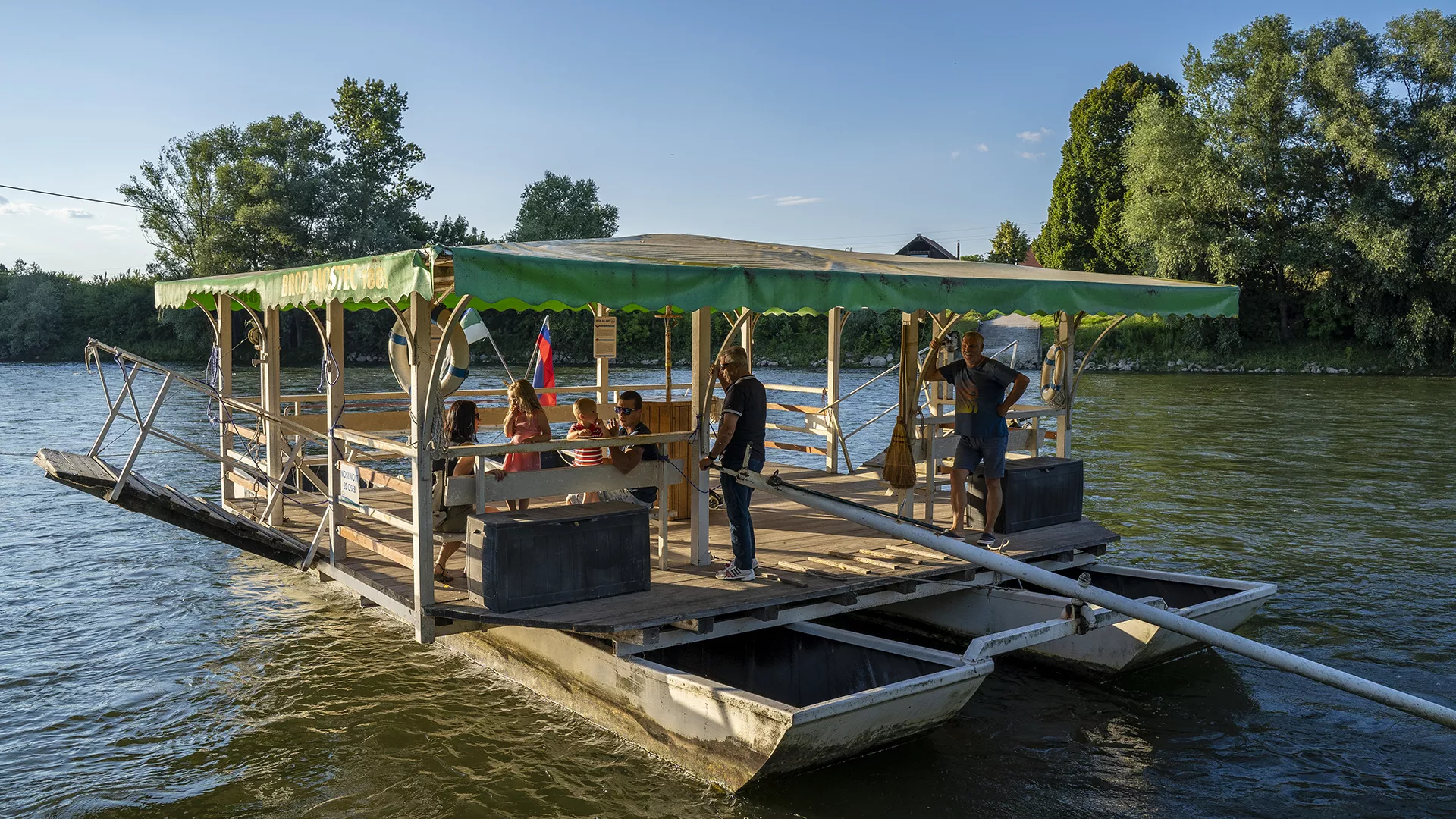
One such example is the Ferry on Mostec– the only operational cable ferry on the Sava River and an important piece of intangible cultural heritage in Slovenia. It offers visitors a unique experience of traditional river crossing. However, safe operation requires a sufficient water level. In the summer months, when water levels drop due to drought, the ferry often cannot operate. This not only affects the preservation of heritage but also reduces the attractiveness of the area for visitors, impacting the local economy.
Mild Winters and Their Consequences
Another clear sign of climate change is increasingly mild winters. While winters used to be colder and rich in snowfall, today they often pass without a proper snow cover.
Snow is not only important for winter tourism—it also acts as a natural reservoir of water that slowly releases into the environment during spring and summer. When there isn’t enough snow, the risk of summer droughts increases, which affects drinking water supplies, the operation of hydropower plants, and the stability of agriculture.
In addition, rapid temperature fluctuations in winter harm plants and animals, disrupt the natural vegetation cycle, and place additional stress on already vulnerable ecosystems.
Tourism and a Climate-Conscious Future
Climate change has a direct impact on tourism—even in Brežice. Summer heat lowers river levels and limits water-based activities, while mild winters reduce water reserves and increase unpredictability in nature. Together, this affects tourism infrastructure, the local economy, and the overall quality of visitor experiences.
But the future is not set in stone. With greater awareness, responsible behavior, and sustainable solutions, we can reduce the impacts of climate change. As a destination, we are committed to making adjustments that preserve natural resources, respect the local community, and continue to offer visitors the opportunity to experience the beauty of our region—in every season.