 Array
On the Day of Remembrance for the Dead, we can honour our loved ones while keeping the environment in mind and reducing waste from grave candles.
On the Day of Remembrance for the Dead, we honour family members, friends and acquaintances who are no longer with us by placing flowers and candles on their graves. A visit to the cemetery can also be an opportunity to think about the amount of waste generated by grave candles and choose a way to remember our loved ones that has less impact on the environment.
How many grave candles do we use?
According to the latest published data from the Ministry of the Environment, Climate and Energy, approximately 3,610 tonnes of grave candles were placed on the Slovenian market in 2024. Based on the average weight of a candle, this amounts to around 8.4 million candles, or 3.9 per resident. In 2010, 6,856 tonnes of candles were placed on the market, which means the quantity has fallen by almost 48 per cent over this period. Between 2023 and 2024, however, it remained at a similar level.
Older articles often cite a figure of around 16 million candles a year. The Ministry’s more recent figure for 2024 is calculated from the weight of candles placed on the market and their average weight. As these figures relate to different periods and calculation methods, they cannot be directly compared. However, the data clearly show that large quantities of waste are generated after use.
Used grave candles contain a range of materials, including plastic or glass casings, metal lids and leftover wax. Electronic candles also contain batteries and electronic components. In 2024, approximately 268 tonnes of electronic grave candles were placed on the market.
Collected grave candles are processed in a dedicated system, where their materials are separated and can be recycled. However, collection, transport and processing all require additional steps. That is why, alongside disposing of candles correctly, it is important to prevent waste or reduce the amount we produce.
How should we sort cemetery waste?
Bins at cemeteries are labelled according to the type of waste they are intended for. Their locations and availability may vary, so check the signs at the collection point before disposing of anything.
| Waste | Where it goes |
|---|---|
| Used grave candles, including electronic candles | In the designated grave-candle bin. Do not dismantle them; batteries and electronic components are handled during further processing. |
| Wilted flowers and other biodegradable waste | In the bin for biodegradable waste, if one is available at the cemetery. |
| Artificial flowers, ribbons, plastic pots and floral foam | In the bin for mixed or other waste, unless the cemetery provides different instructions. |
| Packaging | In the appropriate packaging bin, if one is available. |
Personal and long-lasting ways to remember
Reducing waste does not mean giving up a personal tribute or a chance to be creative. There are several things we can make at home, either on our own or together with children.
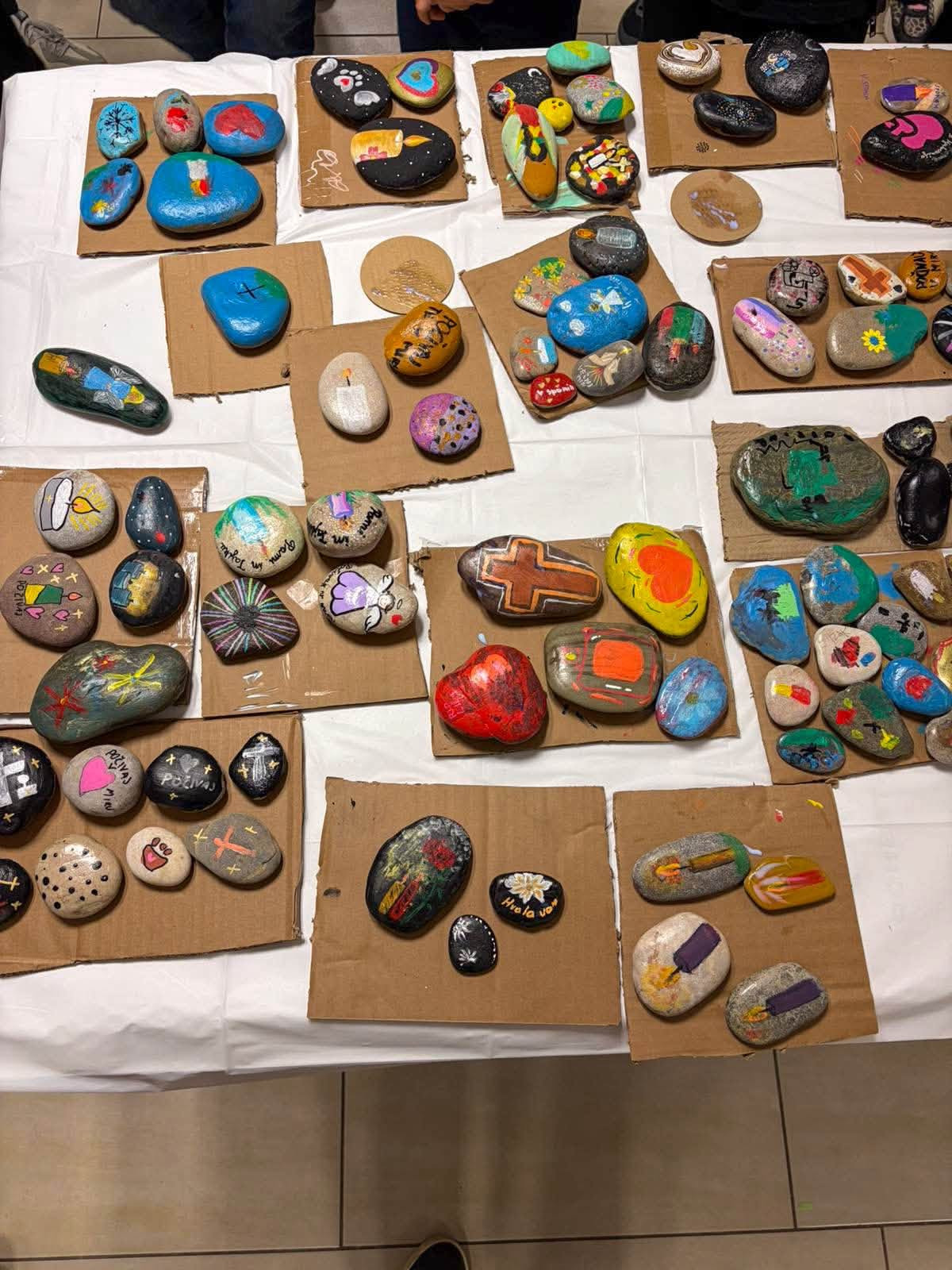
- A painted stone: Find a suitable, smooth stone at home and paint it with a candle, flower or a short message. Creating something together can be an opportunity to talk and remember loved ones.
- A wooden candle: A decorative wooden candle can be bought from a local craftsperson or maker. Buying one also supports local crafts.
- A homemade wooden decoration: Make a simple decoration from a small piece of wood and add a name, symbol or message. Use materials suitable for outdoor use, and reuse the decoration after the holiday.
- An arrangement made from dried flowers: Tie dried flowers into a small arrangement that will last longer on a grave than fresh flowers. To reduce waste, avoid plastic foam and unnecessary packaging, and put the arrangement together so its parts can be separated after use.
As a Slovenia Green Platinum destination, we encourage thoughtful choices and respect for the environment. By using fewer candles and choosing personal, reusable decorations, we can reduce waste while keeping the meaning of remembrance alive.